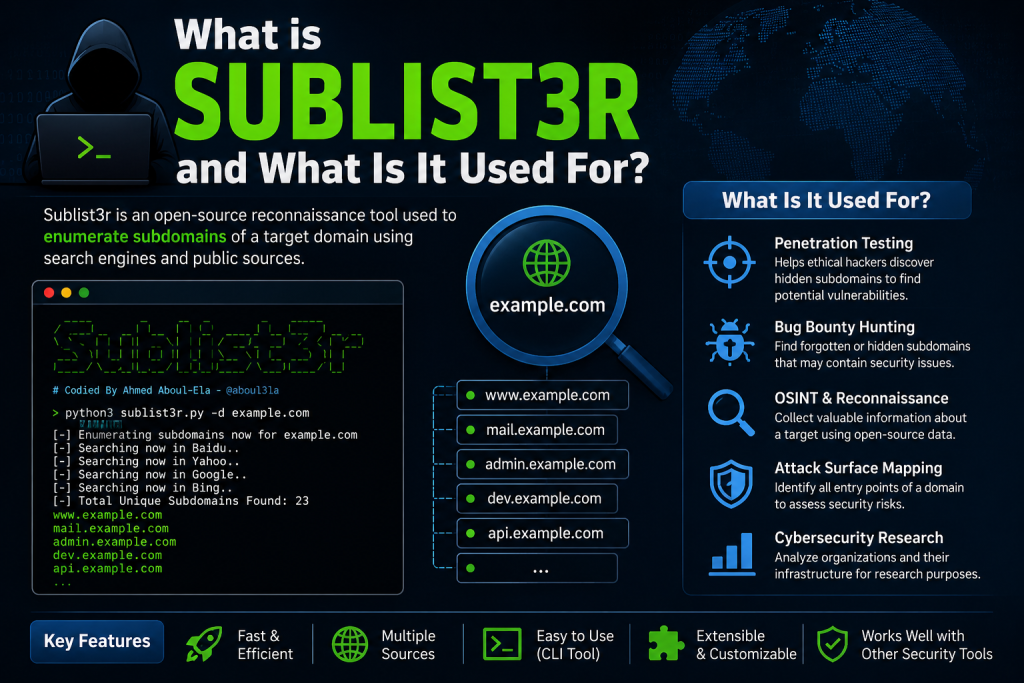
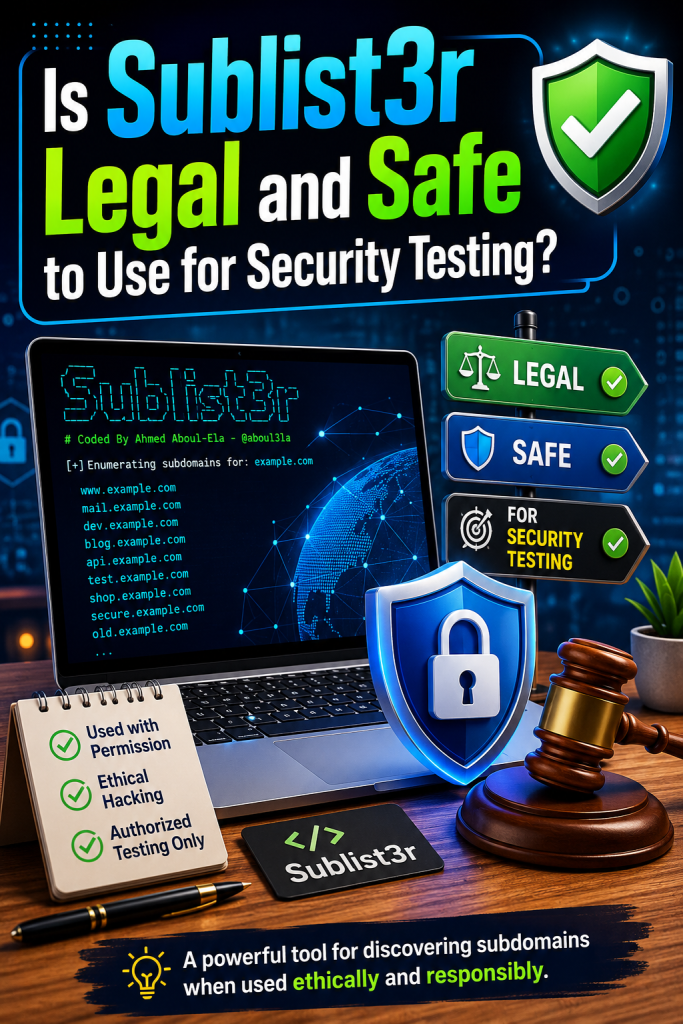
Sublist3r is one of the most popular open-source tools used for subdomain enumeration during reconnaissance and security assessments. It helps cybersecurity professionals, penetration testers, and bug bounty hunters discover subdomains associated with a target domain using publicly available sources. However, many users wonder whether Sublist3r is legal and safe to use for security testing.
The answer depends largely on how and where the tool is used. While Sublist3r itself is designed for legitimate security purposes, unauthorized testing can raise legal and ethical concerns. Understanding its legal implications and safety considerations is essential before incorporating it into any security testing workflow.
Read More: What is the Difference Between Sublist3r and Subfinder?
What Is Sublist3r?
Sublist3r is an open-source Python-based tool designed to discover subdomains associated with a target domain. It gathers information from multiple public search engines, search APIs, and online sources to identify subdomains that may not be immediately visible.
For example, if a company owns the domain:
example.com
Sublist3r may discover subdomains such as:
- mail.example.com
- api.example.com
- dev.example.com
- support.example.com
These findings help security professionals understand an organization’s attack surface before conducting authorized security assessments.
Is Sublist3r Legal?
Yes, If You Have Permission
Using Sublist3r is legal when you:
- Own the domain being tested
- Have written authorization from the owner
- Participate in an approved bug bounty program
- Perform assessments under a legal penetration testing agreement
In these situations, Sublist3r serves as a legitimate reconnaissance tool used for defensive security purposes.
Potential Legal Issues
Problems arise when individuals use Sublist3r against domains without permission.
Although Sublist3r primarily gathers publicly available information, unauthorized reconnaissance can still violate:
- Company policies
- Terms of service
- Security regulations in certain jurisdictions
- Cybercrime laws when combined with other unauthorized activities
Even passive information gathering may be viewed as suspicious if conducted against organizations without consent.
Best Practice
Always obtain explicit authorization before performing any form of security testing, including subdomain enumeration.
Is Sublist3r Safe to Use?
Generally Safe for Your System
Sublist3r is considered safe when downloaded from its official repository and used in a controlled environment.
The tool:
- Does not exploit vulnerabilities
- Does not modify target systems
- Uses publicly accessible sources
- Generates relatively low network traffic
Because of its passive nature, it is commonly used during the reconnaissance phase of security assessments.
Risks to Consider
Despite being relatively safe, there are some risks.
Downloading from Untrusted Sources
Cybersecurity tools should always be downloaded from reputable sources.
Modified versions may contain:
- Malware
- Backdoors
- Credential stealers
- Malicious scripts
Always verify the source before installation.
Excessive Requests
Running enumeration tools aggressively may trigger:
- Rate limiting
- Temporary IP blocks
- Security alerts
Although Sublist3r is not highly intrusive, repeated scans can attract attention from monitoring systems.
Data Exposure
Results may reveal:
- Development environments
- Internal services
- Forgotten subdomains
Handle discovered information responsibly and avoid sharing sensitive findings publicly.
Why Security Professionals Use Sublist3r
Sublist3r offers several advantages for reconnaissance activities:
Fast Subdomain Discovery
It automates the process of collecting subdomains from multiple public sources.
Open Source
Security researchers can inspect the source code, verify functionality, and customize the tool for specific needs.
Lightweight and Easy to Use
Sublist3r requires minimal setup and can produce results quickly, making it ideal for beginners and experienced testers alike.
Useful for Attack Surface Mapping
Organizations use Sublist3r to identify exposed assets and improve security visibility.
Ethical Use of Sublist3r
To stay compliant and ethical, follow these guidelines:
- Test only domains you own or have permission to assess.
- Respect bug bounty program rules.
- Avoid excessive scanning.
- Do not attempt unauthorized exploitation.
- Securely store discovered information.
- Follow responsible disclosure practices.
Using Sublist3r responsibly helps improve security without creating legal or ethical concerns.
Alternatives to Sublist3r
While Sublist3r remains popular, security professionals often combine it with other reconnaissance tools such as:
- Amass
- Assetfinder
- Subfinder
- Findomain
- DNSRecon
Using multiple tools often produces more comprehensive results because each tool relies on different data sources.
Conclusion
Sublist3r is a widely used and generally safe tool for subdomain enumeration when used as part of authorized security testing. Since it relies on publicly available information, it poses minimal risk to target systems and is commonly used by ethical hackers, penetration testers, and security teams during reconnaissance activities. However, the legality of using Sublist3r depends on obtaining proper permission from the domain owner or operating within the scope of an approved bug bounty program. By following ethical guidelines, respecting legal boundaries, and using the tool responsibly, security professionals can leverage Sublist3r to identify potential attack surfaces and strengthen an organization’s overall security posture.